

Popular Paving Styles for Homes in Melbourne’s Northern Suburbs
Your outdoor space is a blank canvas, and the paving style you choose shapes everything else around it. It’s what ties your landscaping together. And, when it complements what you’ve already got, the whole property feels finished.
But across Melbourne’s northern suburbs, the mix of new estate builds and established homes means there’s no single answer. The style that suits a contemporary home in Wollert looks very different to what works on a brick veneer in Bundoora.
What works visually has to work structurally too, particularly on clay soil that moves with the seasons and summers that push surfaces hard.
Here is what’s popular, what performs, and what suits each situation.
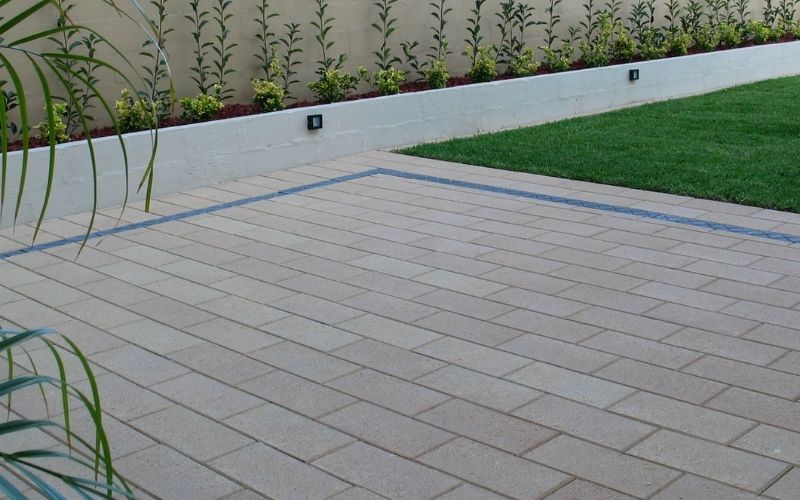
Straight-Lay (Stack Bond) and Stretcher Bond Paving
For contemporary homeowners, clean lines are the preference. That’s where straight-lay (or stack bond) and stretcher bond patterns work incredibly well.
- Straight-lay (stack bond) is laid in a clean grid with joints aligned in both directions.
- Stretcher bond follows the same principle, but with horizontal joints aligned and vertical joints staggered, like a brickwork pattern.
Both styles are simple, versatile, and when set correctly, genuinely sharp. Because they offer such an uncluttered look, they’ve become popular for new estate developments in areas like Doreen, Wollert and Mernda.
However, straight-lay is an unforgiving pattern. Slight variations in paver size, or a sub-base that’s not perfectly level, show up immediately. Stretcher bond is less rigid, but with any of these clean-line designs, the margin for error is smaller than it looks, which is why the quality of the install matters as much as the quality of the material.
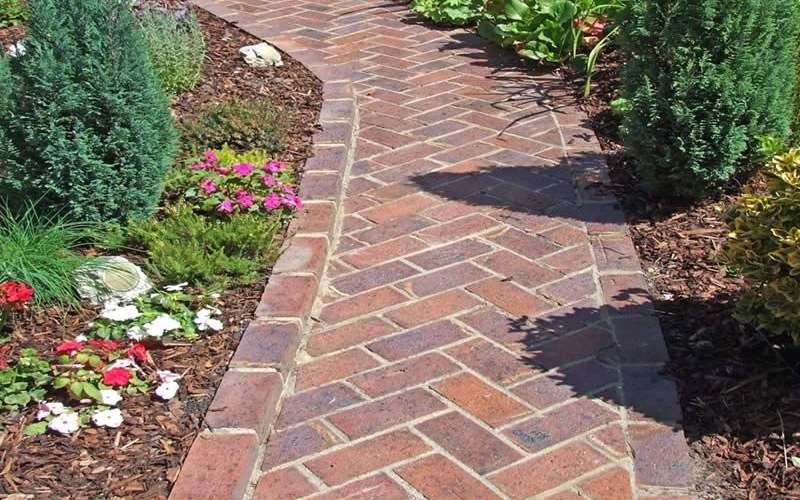
Herringbone Paving
With its distinct v-shaped interlocking pattern, Herringbone has a practical reason for its enduring popularity. The way the paving knits together distributes load across the surface rather than concentrating at the joints. That makes it one of the strongest laying patterns available.
For driveways especially, it’s difficult to match. This design handles vehicle traffic with ease, resists creep (the gradual movement of pavers under repeated load), and has a considered, finished look that a simple grid doesn’t always achieve.
It suits brick and rectangular concrete pavers best. Yet, with large-format or irregular materials, maintaining the pattern cleanly becomes difficult, and the effect is lost.
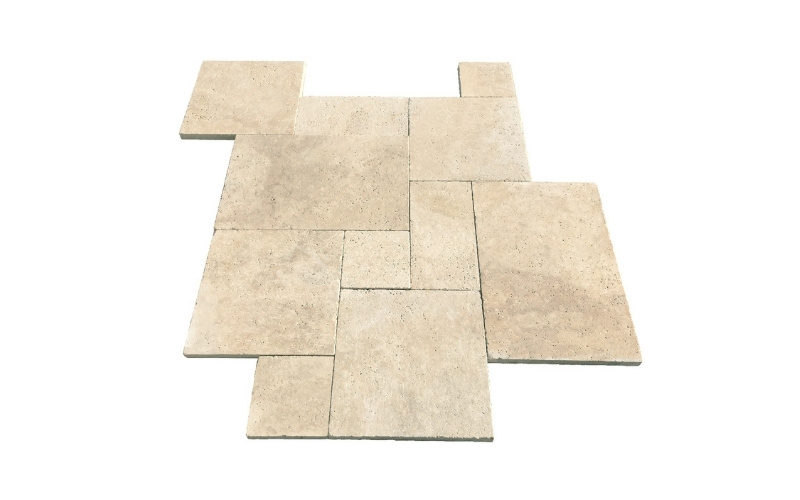
French Pattern Paving
Also known as a Versailles pattern, this layout combines a set of four different-sized square and rectangular pavers that lock together in a repeating pattern. Instead of running in straight lines, the varied sizes break up the rigid uniformity of a straight grid without going fully random.
The result sits between straight-lay and crazy paving. It’s more premium than a grid, but more controlled than an irregular pattern. French pattern reads as natural and intentional at the same time, making natural stone, particularly sandstone, limestone and travertine, the ideal material.
It requires a careful eye to lay correctly and a methodical approach. But, when thoughtfully laid out, a French pattern surface is genuinely striking. If not meticulously managed, however, the structure is lost.
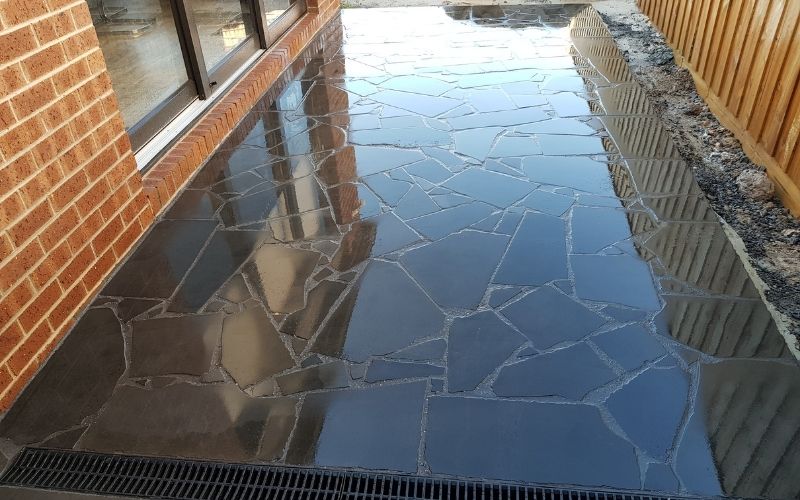
Crazy Paving
Pieces of natural stone are laid in a random, jigsaw-like arrangement, meaning no two sections look the same. Because the joints and stone sizes vary, the overall effect is organic and textured in a way you just can’t get from a standard grid-based pattern.
Its reputation is complicated. Heavily used through the 1970s and 1980s, it became associated with dated aesthetics and has spent decades being pulled up and replaced. However, it’s having a revival, driven largely by better stone selection, tighter joints, and more deliberate colour choices.
This style suits entertainer backyards, established gardens, and homes where you want a more relaxed, natural look. The irregular surface texture provides natural slip resistance, which also makes it a practical choice for pool surrounds and outdoor dining areas.
The difference between a project that feels like 1985 and one that looks like a considered design decision comes down to the quality of the stone and the precision of the installation.
Exposed Aggregate Concrete
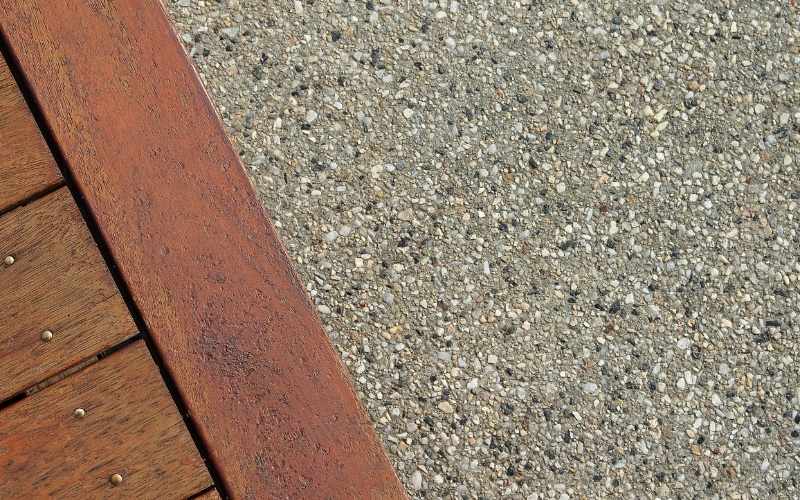
This finish is created by removing the surface layer of concrete before it fully cures, revealing the stone aggregate beneath. The result is a textured, non-slip surface that suits large areas where pavers would look too busy, or joints create garden maintenance issues.
It’s seamless, durable, and more customisable than you might expect. Aggregate type, colour, and stone size can all be chosen to complement your home, so the finish can be anything from natural and earthy to clean and contemporary.
For new estate blocks on clay soil, this finish provides a structural advantage. By eliminating gaps, you remove the weak points that shifting clay typically affects. When properly reinforced with control joints in the right places, it handles the seasonal ground movement better than most paver alternatives.
Driveways, entertaining areas, wide pathways, and pool surrounds are all natural fits.
Large-Format Pavers
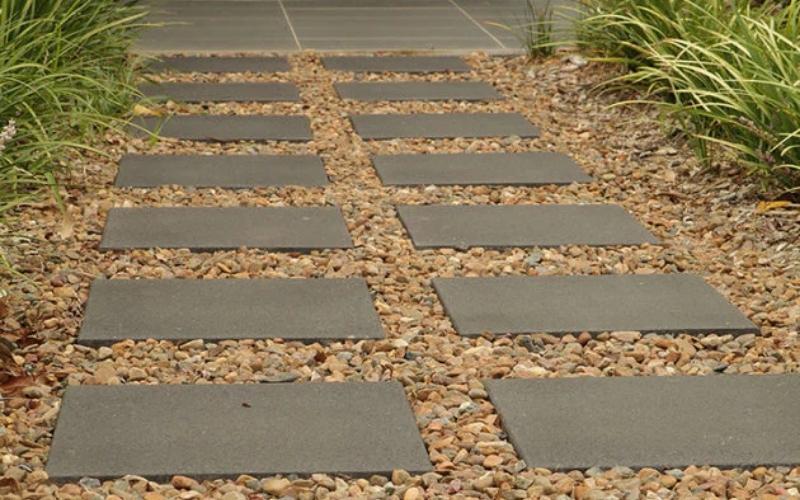
Typically 600 x 600 mm and above, these pavers have become one of the most requested styles for contemporary homes in the northern suburbs.
Fewer joints create a cleaner, more architectural look, which makes a space feel bigger and more considered. Large-format pavers suit modern homes with strong horizontal lines and minimal detailing, a common aesthetic across newer estates.
The trade-off is the need for a perfectly level sub-base. Any unevenness has nowhere to hide. Achieving the desired finish depends entirely on the thoroughness of the ground preparation and accuracy of the cuts.
When the style fits the property and is installed correctly, it’s one of the most visually impactful choices available.
Choosing the Right Paving Style for Your Home
The right paving style isn’t just about what looks good in a photo. It’s about matching the material to the architecture of your home, how you actually use the space, and what the ground conditions are like on your specific block.
A few questions worth working through before you commit:
Does it Match Your Home’s Character?
Your paving should feel like it belongs. Modern builds often benefit from the precision of a clean grid. In contrast, traditional or established properties lean toward textures and patterns that feel more organic.
What’s the Main Purpose for the Space?
Driveways require a pattern that handles vehicle load and resists creep. Pool surrounds demand slip resistance. Entertaining areas need a finish that looks great from inside the house and feels even better when you’re using it.
What’s Happening Beneath the Surface?
Across Melbourne’s northern suburbs, clay-heavy soil affects how any paved surface performs over time. Regardless of your chosen style, the end result is only as good as the sub-base. Don’t treat preparation as a minor detail. It’s what separates a surface that holds for twenty years from one that needs attention in five.
If you’re still looking to finalise your material choice, compare them in our guide on paving types.
Paving Built for the Way You Live
Your project should be built to last and designed to match the home it’s part of.
At Contemporary Landscapes & Maintenance, we’ve been laying paving across Melbourne’s northern suburbs for over 20 years. We’ll help you choose a style and material that suits your home, budget, and back the finished result with a 7-year warranty.
Book Your Free Consultation or Call Us To Get Started