

Best Paving Types for Melbourne’s Northern Suburbs
Choosing paving in Melbourne’s northern suburbs is not the same decision as choosing paving anywhere else in the city.
The soil conditions are different. The summer temperatures are more extreme. And a large proportion of the housing stock sits on new estate blocks handed over with bare clay and a concrete path, presenting a specific set of conditions that not every paving material handles equally well.
Get the material right, and your paving will still look good in fifteen years. Get it wrong, and you’ll be managing cracks, lifting surfaces, and costly repairs well before that.
Here’s what performs, what to watch for, and why local conditions matter more than you’d expect.
Why the Northern Suburbs Are Harder on Paving Than Most of Melbourne
Two things set this part of Melbourne apart.
Clay Soil
Across Mernda, Doreen, Wollert, Bundoora, South Morang, and Epping, the subsoil is predominantly heavy clay. Clay expands when wet and contracts when dry. That constant movement puts pressure on whatever sits above it.
Paving laid without the right base prep on this type of ground will shift, crack, and lift as the seasons change. Not because the material failed, but because the ground beneath was never properly managed.
Summer Heat
The northern suburbs regularly push past 38 degrees, and some paving materials absorb and hold that heat in ways that make them genuinely uncomfortable underfoot during the hottest months. For driveways and entertaining areas in full afternoon sun, surface temperature is a real consideration.
Neither factor rules out any particular material. But both mean that base preparation and material selection have to account for what’s actually under and around your home, not just what looks good in a catalogue.
Paving Types for Your Local Conditions
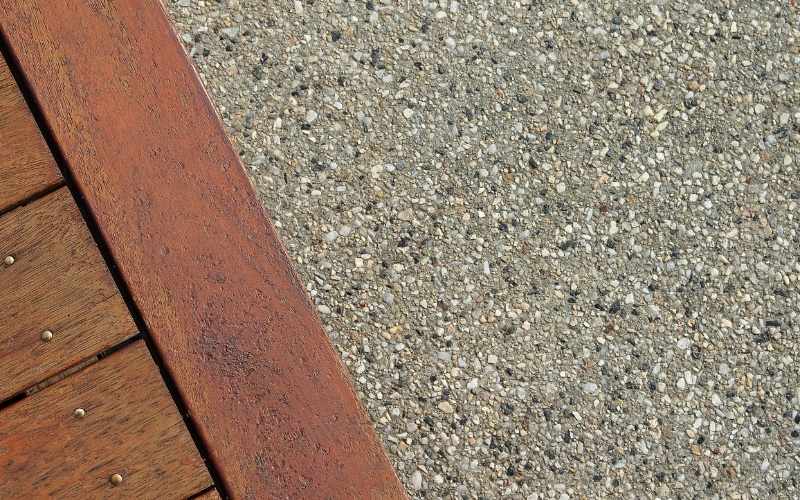
Exposed Aggregate Concrete
Works well for: driveways, entertaining areas, paths, and pool surrounds.
Often the most practical choice for new estate blocks across Melbourne’s northern suburbs.
The process removes the surface layer of concrete before it fully cures, revealing the stone aggregate beneath. The result is a textured, non-slip finish that handles foot traffic and vehicle loads well, requires minimal maintenance, and drains more effectively than a smooth concrete surface.
On clay soil, exposed aggregate gives you a structural advantage over individual pavers, it’s poured as a continuous slab. There are no joints for clay movement to work into. With the right reinforcement and control joints placed at the correct intervals, it manages ground movement far better than a laid paver surface on a loose base.
It also handles summer heat well when lighter aggregate colours are chosen. Not as cool underfoot as natural stone, but considerably better than dark-toned surfaces baking in full afternoon sun.
Concrete Pavers
Works well for: driveways, pathways, entertaining areas, and garden borders.
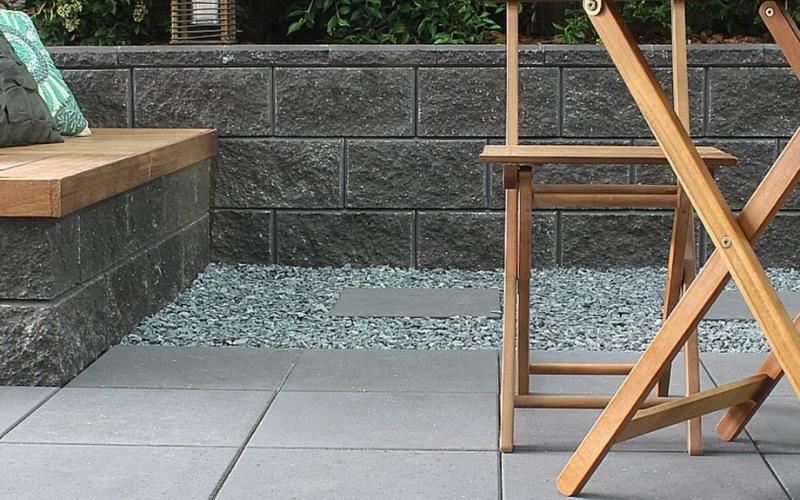
Suited to the widest range of applications and budgets across the northern suburbs, modern options look considerably better than their reputation suggests.
The basic grey square of twenty years ago bears little resemblance to what’s available now. With a vast range of sizes, profiles, and finishes, including textured surfaces that closely replicate natural stone at a significantly lower cost. For anyone wanting a high-end look without the high cost, they’re a practical choice.
On our local clay soil, they perform well when laid on a properly compacted base with correct drainage. The jointed format does create pathways for ground movement over time, which is why base preparation matters.
When laid correctly, they’re durable, low-maintenance, and straightforward to repair if a section does shift. Just keep in mind, darker tones get genuinely hot in full sun. Lighter tones and textured finishes are the best way to address both the heat and slip concerns at once.
Natural Stone
Works well for: entertaining areas, pool surrounds, feature paths, and high-end driveways.
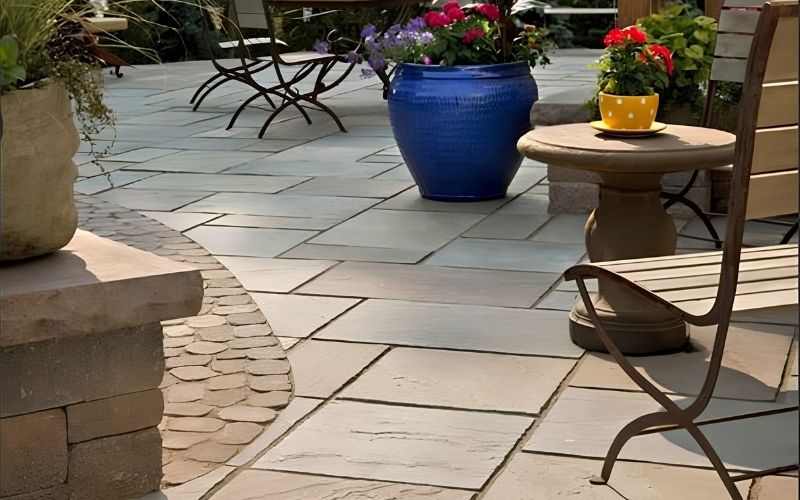
Sitting at the premium end of the paving market, in the right application, nothing else comes close to natural stone for visual impact. Travertine, sandstone, and limestone are the three most popular types you’ll come across for your project.
Travertine – suits contemporary and Mediterranean-style homes and handles Melbourne’s temperature swings well. It stays relatively cool underfoot, making it a popular choice for entertaining areas and pool surrounds.
Sandstone – gives a warmer, more relaxed finish and suits established gardens and cottage-style properties particularly well.
Limestone – sits between the two in both price and aesthetic. Its natural slip resistance and heat performance make it a practical choice for pool surrounds and outdoor dining areas.
These natural stone pavers require a well-prepared base. They’re less forgiving than concrete if the ground moves, and rectification work costs considerably more than on concrete alternatives. And, because sandstone, travertine, and limestone are porous, they must be carefully sealed to prevent moisture from working into the stone and sub-base beneath.
But, if you get the base right, they all provide a long-lasting, high-return investment.
Bluestone
Works well for: driveways, front paths, courtyards, and feature areas.
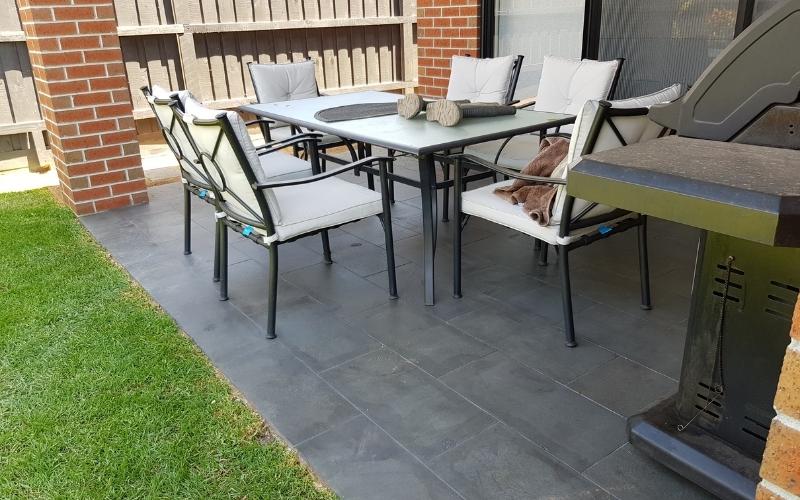
Bluestone is the most Melbourne paving material there is. From inner-city laneways to suburban driveways, its deep charcoal tones have complemented a wide range of home styles and have done so for decades.
However, two points are worth specifying correctly upfront.
Focus on Finish
Standard sawn or honed bluestone has a smooth finish and becomes slippery when wet. For driveways, paths, and any surface near a pool, a flamed or sandblasted finish is the right call. It significantly improves grip without changing the appearance of the stone.
Manage Heat
Those dark charcoal tones naturally absorb heat in direct sun. If you intend to walk on the surfaces barefoot in summer, this is worth factoring into your material decision or finish choice.
Specify both correctly, and you gain one of the most durable, long-lasting paving options available. It rewards good installation and holds up well across all seasons.
Brick Pavers
Works well for: driveways, front paths, garden borders, and heritage or traditional-style homes.
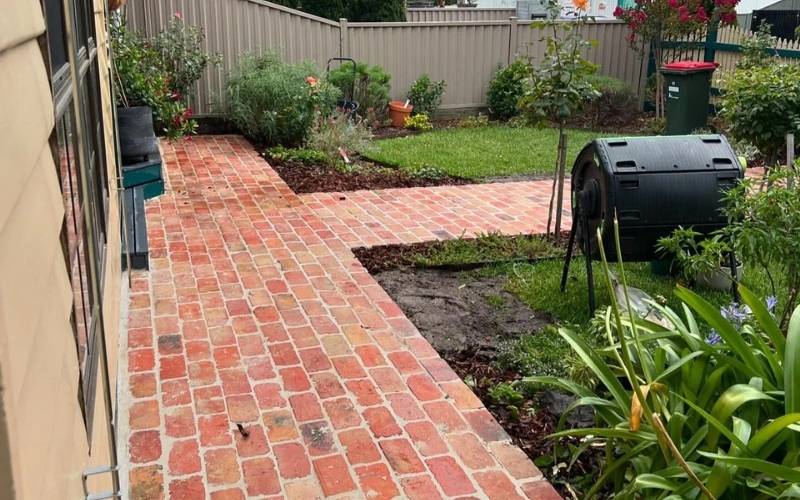
Brick pavers suit established properties and homes with a traditional architectural character. They’re less common on new estate builds, where the architecture tends toward the contemporary, but for older-style homes, they often feel like the natural choice.
- Clay brick pavers are kiln-fired, which gives them excellent colour stability and long-term durability. They handle Melbourne’s climate well and require less ongoing maintenance than most natural stone alternatives once correctly laid.
- Recycled red brick pavers each offer a lived-in look that new bricks can’t replicate. They’ve shown they can withstand the elements, giving you a hard-wearing, authentic finish that’s an environmentally friendly option for heritage projects.
Regardless of whether you go for old or new brick pavers, the installation pattern is essential for longevity. Read our guide on popular paving styles to find out why the herringbone pattern is more than a decorative design.
Cobblestone
Works well for: driveways, feature paths and areas, garden borders, and traditional or older-style homes.
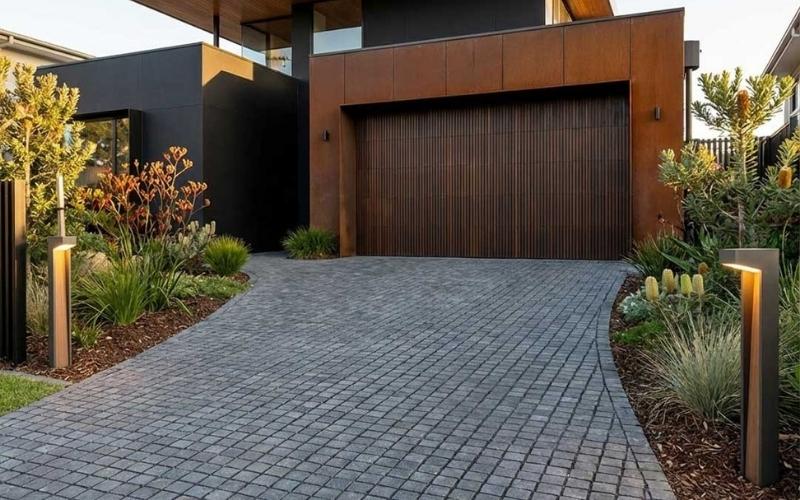
The appeal with cobblestone is old-world character, keeping it far apart from modern uniform paving.
Aesthetics aside, they’re also incredibly hardwearing. Historically used for horse-drawn carriage ways, they handle the weight of today’s traffic with few issues. And, the small individual format allows for more flexibility compared to larger-format pavers, meaning they’re practical for curved paths or irregular garden corners.
One thing to keep in mind is the foundation. Because cobblestones are individual units, they will shift over time if the base isn’t stable or lacks proper drainage. You must have a robust sub-base to prevent this from happening. When doing so, this paving type provides you with that classic traditional finish that improves with age.
Granite
Works well for: patios, alfresco areas, driveways, and feature areas.
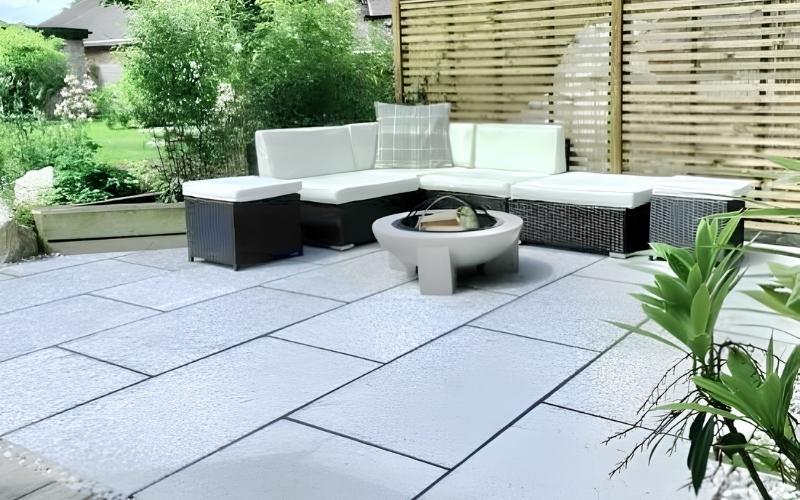
Granite is dense, doesn’t stain easily, and is about as robust as paving gets. It’s a frequent choice for high-end patios because it provides a luxurious look, but it doesn’t need the sealing and maintenance that some of the softer natural stones require.
While a bigger upfront investment compared to other paving types, it’s a surface that’s going to last. To get the best from your pavers, there are two points to consider:
- Flame or sandblasted surfaces give you grip, preventing slips when wet, a must-have for wet areas, like pool coping and surrounds, or paths on a gradient.
- Because granite is heavy, it demands a base sufficient enough to handle the load and potential ground movement.
Get these right, and you create a space that serves both its practical and aesthetic purpose, regardless of the traffic it handles.
Which Material Suits Your Block?
Three things shape the right material choice: your home’s architectural style, the intended use of the space, and what the ground conditions are like on your specific block.
For new estate blocks on clay soil, exposed aggregate or quality concrete pavers, when installed on a properly prepared base, give the most reliable long-term performance. For established properties where aesthetics carry more weight, natural stone or brick pavers are worth the investment.
Whichever material you choose, the base preparation underneath determines whether the surface still looks good in a decade. Across Melbourne’s northern suburbs, that means accounting for clay, correct drainage falls, and a compacted sub-base before a single paver or litre of concrete goes down.
Paving Built on the Right Foundations
Your backyard is where you live, relax and entertain, not just a surface. That’s why at Contemporary Landscapes & Maintenance, we listen to your vision and assess your site conditions before we recommend the perfect paving material, ensuring the foundation is right before we ever break ground.
With over 20 years of experience across Melbourne’s northern suburbs and a 7-year warranty on all our work, we’re here to help you build an outdoor space you can be proud of.
Book Your Free Paving Consultation To Talk Through Your Project